
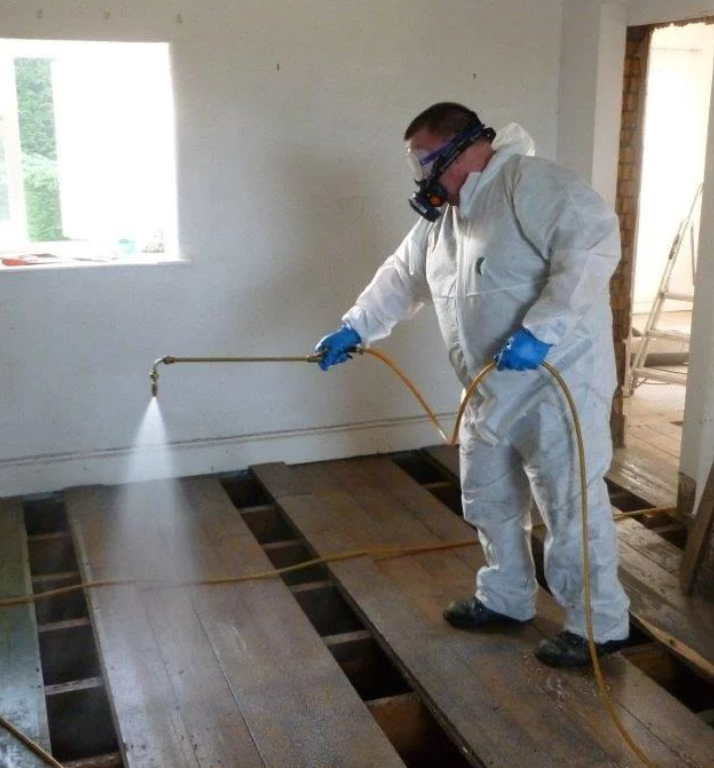
 Dry rot is a serious form of fungal timber decay that can affect floorboards, joists, roof timbers and other structural wood within a property. Despite its name, the fungus requires moisture to develop. It usually becomes established where timber remains damp because of leaks, defective ventilation, penetrating damp or another source of persistent moisture. Once active, it can spread beyond the initially affected area, making early diagnosis and treatment especially important.
Possible warning signs include timber that appears darker or cracked, a brittle texture and wood that breaks into cube-like sections. Fine fungal strands may be visible on nearby surfaces, while more advanced outbreaks can produce pale growth or rust-coloured fruiting bodies. A mushroom-like or musty smell may also be present. However, decay can remain concealed beneath floors, behind plaster or within enclosed voids, so the full extent may not always be obvious.
Effective dry rot treatment begins by locating and eliminating the moisture source. This may involve repairing leaking plumbing, defective gutters, damaged roofing, cracked masonry or blocked ventilation. Treating the fungus without correcting the damp conditions is unlikely to provide a durable outcome. The affected area must also be carefully examined to distinguish dry rot from wet rot and determine which materials have lost their strength.
Where structural timber has been significantly weakened, the damaged sections may need to be removed and replaced. Retained timber can be cleaned and treated where appropriate, while surrounding masonry may require remedial attention if fungal growth has travelled across it. The precise treatment depends on the building, the scale of the outbreak and the accessibility of the affected area.
Good airflow is an important part of prevention. Suspended timber floors rely on functioning air bricks and clear subfloor ventilation. When vents are blocked by debris, raised ground levels or later alterations, moisture can accumulate in spaces that are rarely inspected. Similar risks may arise in roof voids, cellars and enclosed service areas if ventilation is inadequate.
Cheshire Damp provides dry rot investigation and treatment across Wirral, Chester and Merseyside. Properties in these areas range from historic buildings to modern homes, and each presents different challenges. Traditional construction materials may require a sensitive approach, while later additions can sometimes create hidden moisture traps or restrict ventilation.
Dry rot should not be ignored or covered over with cosmetic repairs. Replacing damaged plaster or decorating the surface will not resolve fungal decay affecting concealed timber. A thorough response must address the moisture source, the fungal outbreak and any resulting structural deterioration.
Anyone who suspects dry rot should arrange an inspection before the damage progresses. Cheshire Damp can assess the affected areas, explain the likely cause and recommend suitable remedial measures. Early intervention can protect important building fabric, limit repair costs and help restore confidence in the safety and condition of the property.